

Pratt & Whitney Canada has begun ground testing a flight-standard hybrid-electric propulsion system and propeller in Longueuil, parent company RTX said.
After the ground tests, the system will be installed on a modified De Havilland Canada Dash 8-100 experimental aircraft. The demonstrator’s first flight is expected in 2027.
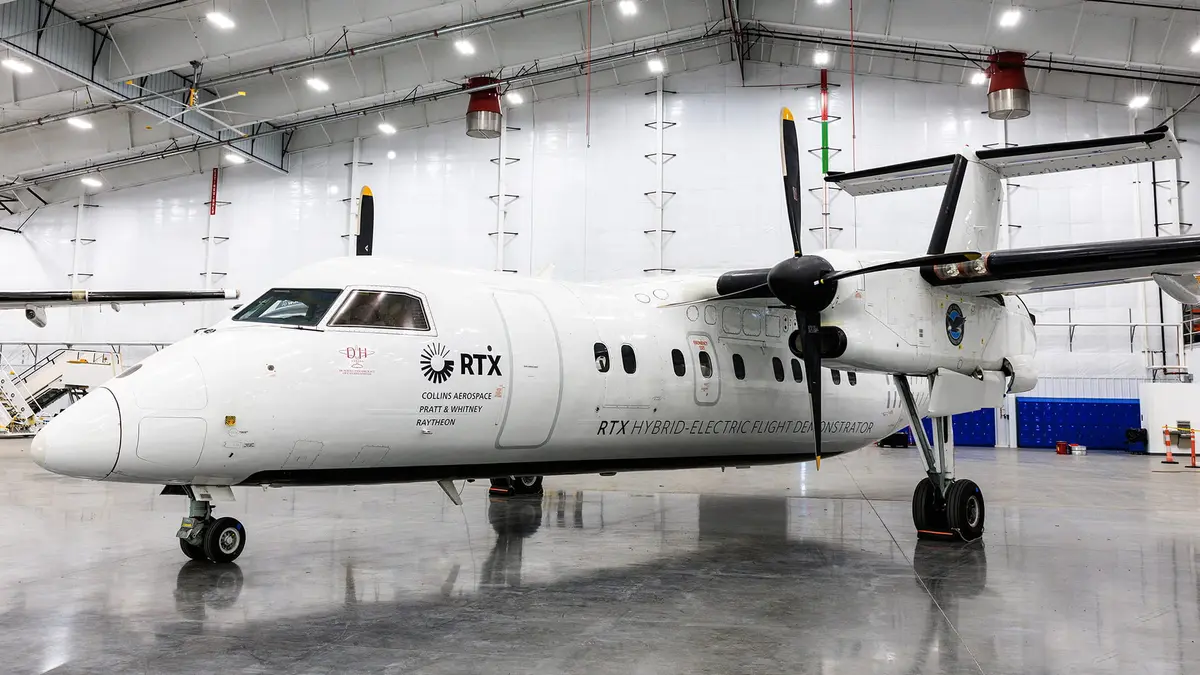
The system combines an advanced Pratt & Whitney Canada thermal engine, a 1-megawatt electric motor and controller developed by Collins Aerospace, and an H55 battery. The electric motor is intended to add power during takeoff and climb.
The project aims to demonstrate up to a 30% improvement in fuel efficiency on a typical 250-nautical-mile regional turboprop mission. This is a design target rather than a verified result from commercial operations.
Partners include De Havilland Aircraft of Canada, GKN Aerospace, AeroTEC, Ricardo, Canada’s National Research Council and the Innovative Vehicle Institute. The Canadian and Quebec governments are supporting the work.
Assembling the final, flight-standard propulsion system brings us one step closer to proving hybrid-electric technology in flight. We are advancing thermal-engine and hybrid-electric technologies that could improve fuel efficiency and performance for a wide range of future aircraft applications — Jean Thomassin, executive director for New Products and Services Introduction at Pratt & Whitney Canada